
Last updated September 24, 2026
Free in-home measure and quote - PGT, CGI and CWS impact lines compared on your actual openings, style by style
 Before
 After
After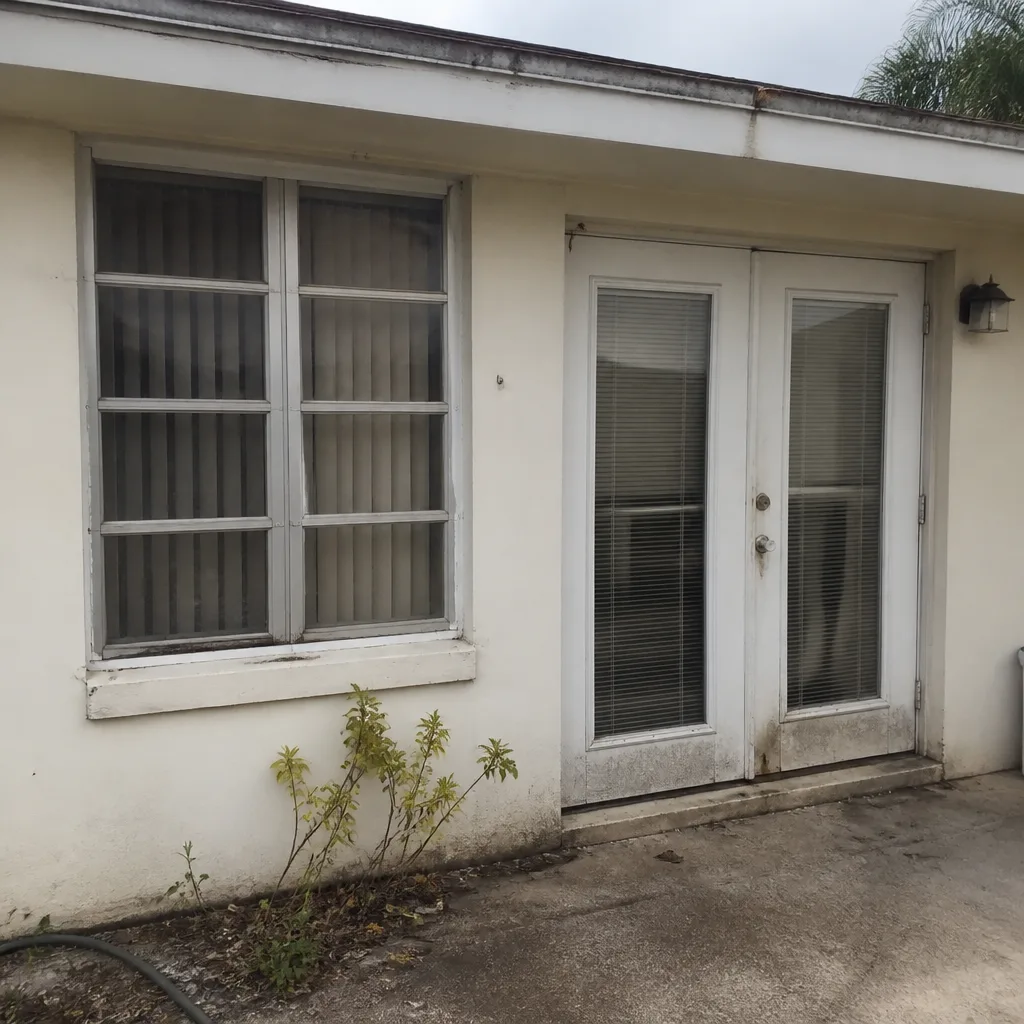 Before
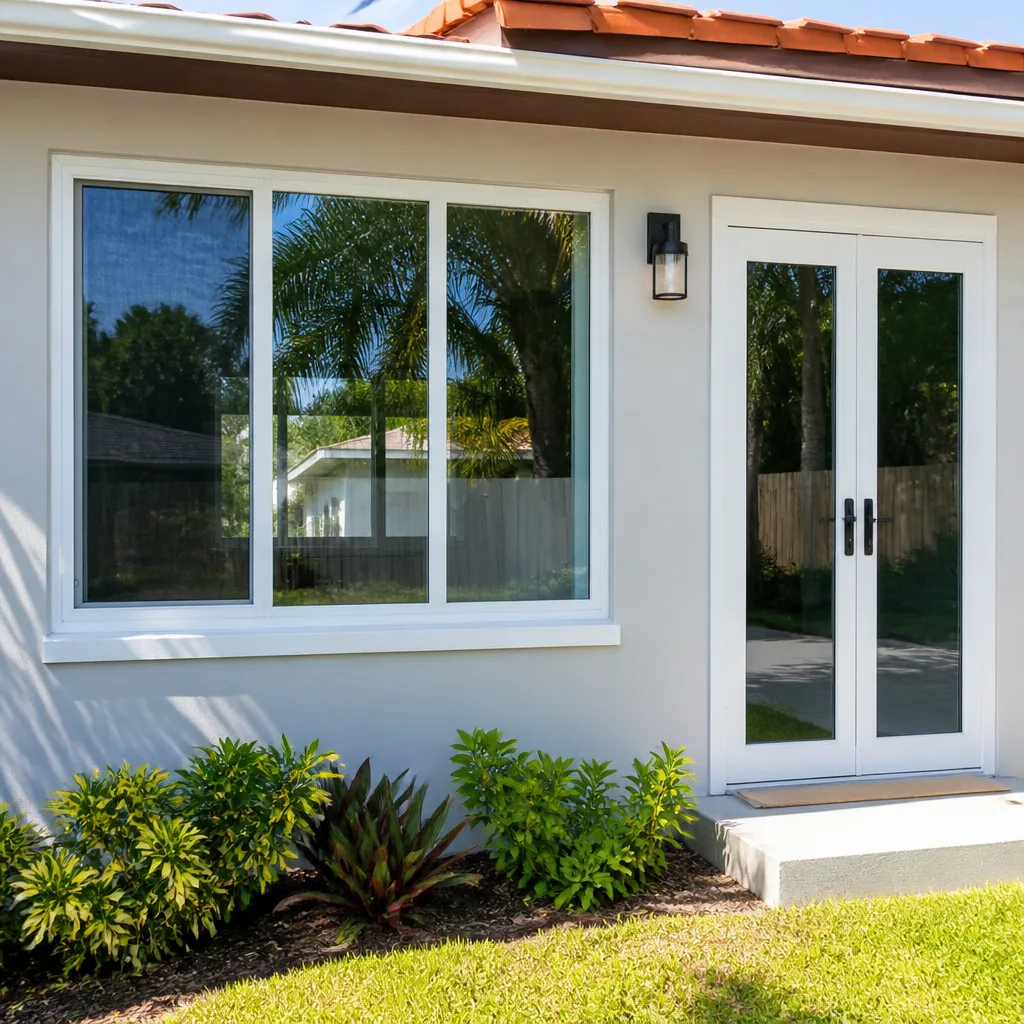 After
After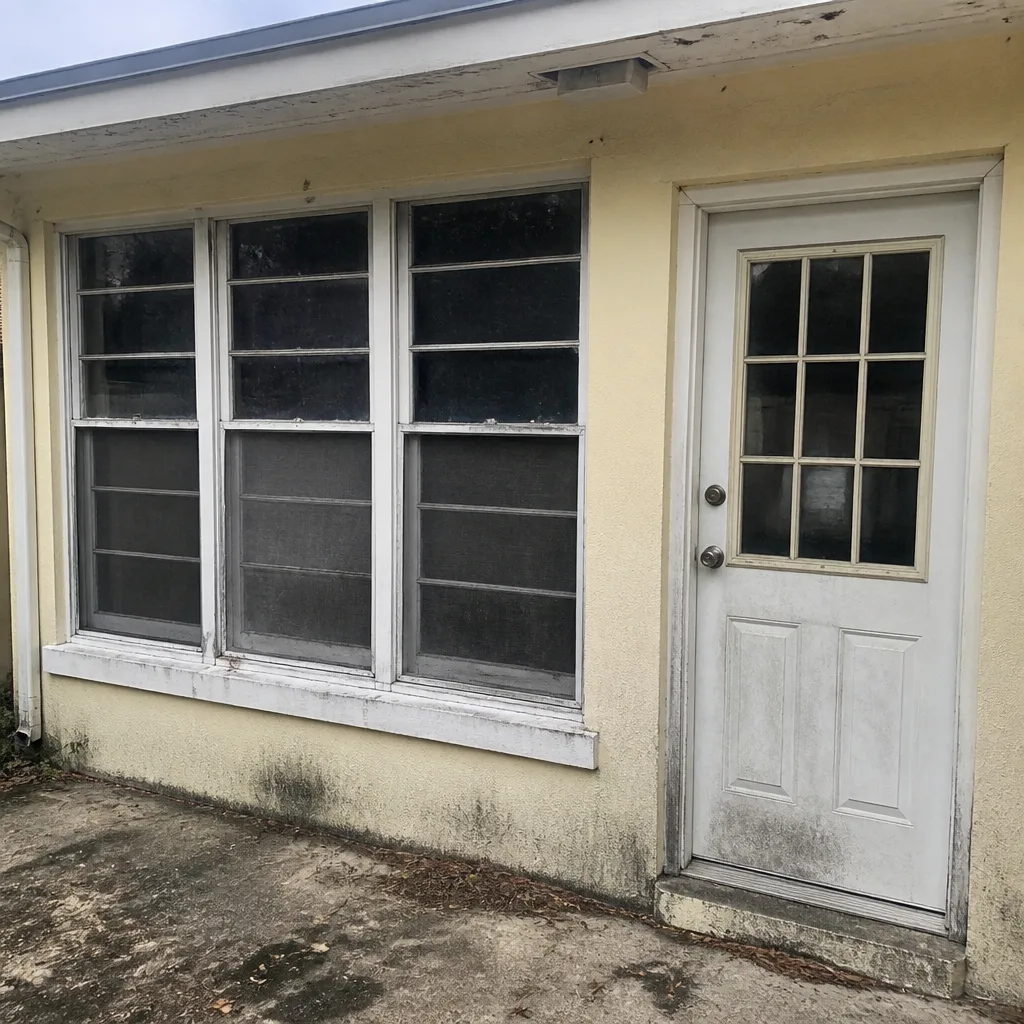 Before
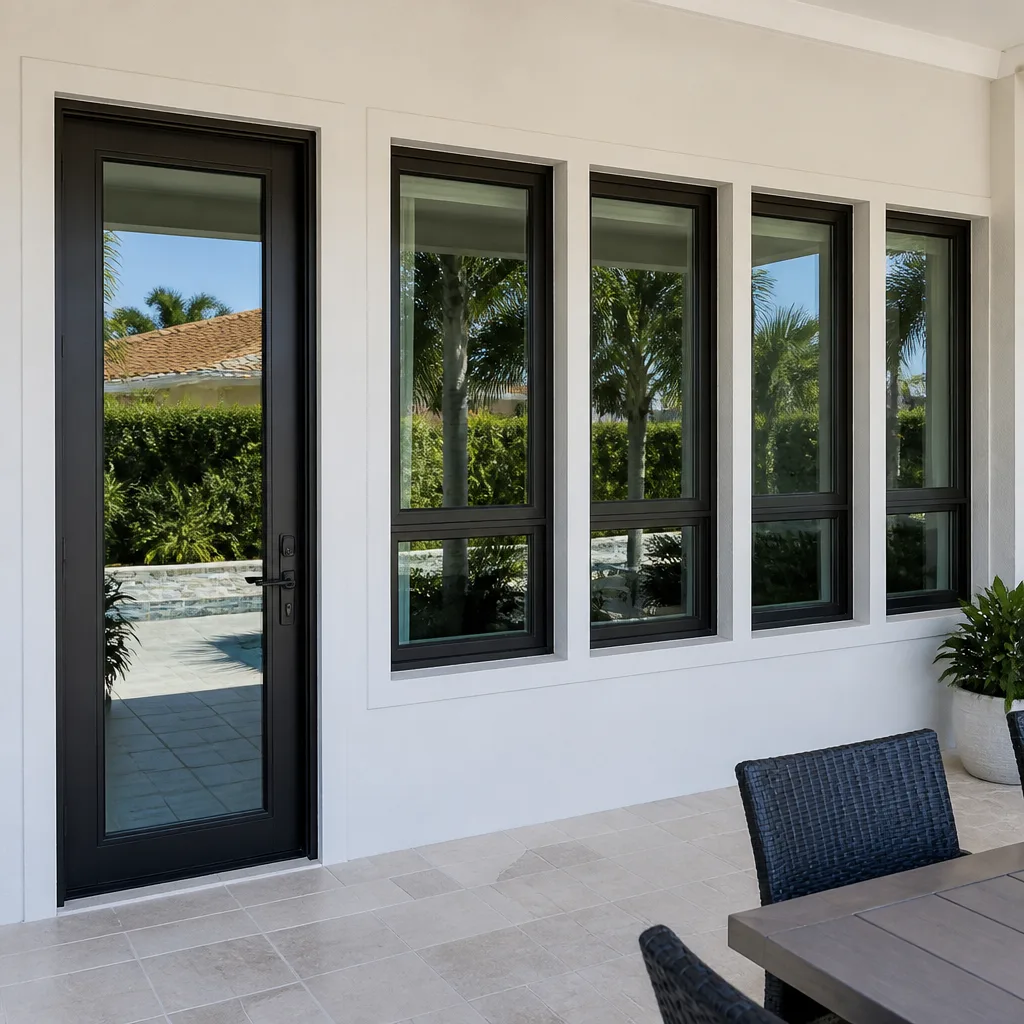 After
AfterWindows & Doors Warning Signs: A Margate Homeowner’s Reference Guide
A fogged double-pane window is uncomfortable to look at but structurally irrelevant to your insurance. A hairline crack in the glazing bead of an impact window is invisible at ten feet but is a documented reason for a wind-mitigation inspector to downgrade your opening from “protected” to “unprotected,” which can raise your Citizens Insurance premium by hundreds of dollars annually. In Margate, where every home east of Rock Island Road sits in a flood zone and every block west of State Road 7 faces the full force of Atlantic hurricane-season winds, knowing which window and door warning signs matter for compliance versus comfort is not optional. This guide classifies every common symptom by urgency and consequence, using the three-tier system we apply on every Sightline Windows & Doors Margate home survey.
Quick Answer
Window and door warning signs fall into three categories: cosmetic issues (fogged glass, surface scratches) that affect appearance only; functional problems (sticking sashes, air infiltration) that raise energy bills and reduce comfort; and compliance failures (delaminated glazing compound, cracked impact beads, failed thresholds) that can void your wind-mitigation rating, trigger permit violations under Florida Building Code, and increase insurance premiums. Most Margate homeowners can safely monitor cosmetic issues through one wet season, but compliance failures require documented inspection within 30 days. For a deeper look at all three tiers, see The Complete Guide to Windows & Doors in Margate.
Table of Contents
- The Three-Tier Classification System
- Cosmetic Warning Signs: What You Can Monitor
- Functional Warning Signs: Performance and Cost
- Compliance Warning Signs: Insurance and Code
- Failed Glass Unit vs. Frame Seal Failure
- Reading Door Threshold Damage from Below
- Impact Window Glazing Compound Delamination
- Homeowner Documentation Protocol
 Before
 After
AfterThe Three-Tier Classification System
Every window installation in Margate we assess begins with this framework. It prevents the common error of treating a $2,400 compliance failure like a $200 comfort issue, or vice versa.
Tier 1: Cosmetic. These signs affect what you see, not what the opening does. Fogging between panes of a non-impact window. Surface oxidation on aluminum frames. Discoloration of vinyl cladding. They do not appear on wind-mitigation inspection forms. They do not trigger code enforcement. They do not void manufacturer warranties. In our experience across Margate’s 33063 and 33068 ZIP codes, cosmetic issues are the most common reason homeowners replace windows prematurely, spending $8,000-$14,000 on full-frame replacement when a $340 sash replacement would have restored the sightline.
Tier 2: Functional. These signs affect operation, energy performance, or both. A sash that requires shoulder pressure to close. A weatherstrip that has compressed to paper-thin. A door that shudders in the frame during a thunderstorm. Functional issues raise cooling costs, which matters in Margate, where the cooling degree-day average runs 4,200 annually and a failed low-E coating can add $180-$340 per year to a FPL bill. They may appear on a wind-mitigation report as “operable but not sealing,” which costs points but does not automatically downgrade the opening.
Tier 3: Compliance. These signs affect your legal status, insurance rating, or warranty coverage. A cracked glazing bead on an impact-rated unit. Delamination of the glazing compound from the frame. A threshold that has allowed water to reach the subfloor. These are the signs that trigger our immediate recommendation for window replacement in Margate, because the cost of delayed action is not the repair. It is the premium increase, the permit violation, or the denied claim.
The Haven Standard requires us to document the tier on every measured survey we deliver. The customer keeps that document. The written quote references it. When we return for installation, the photo record confirms the tier has been addressed.
Cosmetic Warning Signs: What You Can Monitor
These are the signs that generate the most anxiety and the least consequence. Learn to identify them, and you will avoid replacing an opening that still performs its structural job.
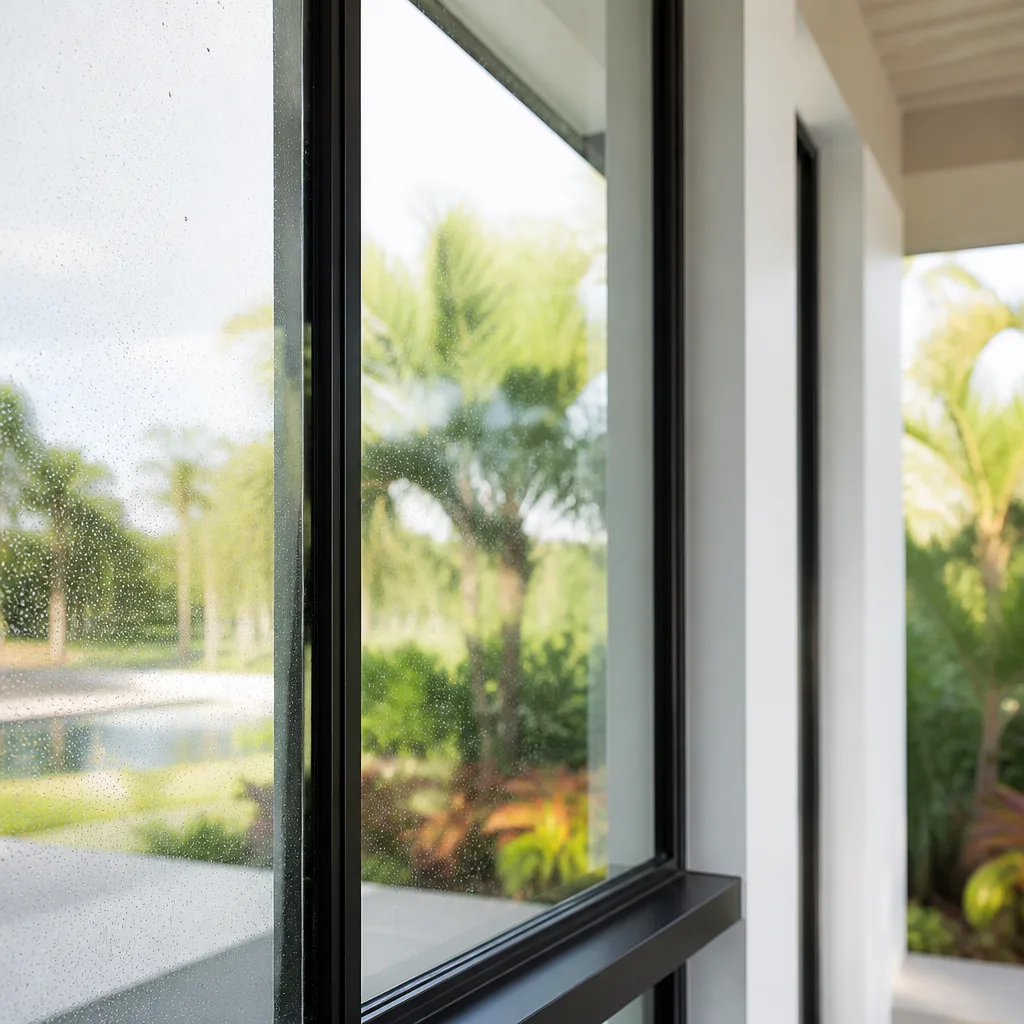
Fogged insulated glass units (non-impact windows). Moisture between the panes of a standard double-hung or picture window means the hermetic seal has failed. The argon or krypton gas has escaped. The low-E coating may still function, or may have degraded at the edge where moisture contacted it. The window is less efficient. It is not unsafe. In Margate’s high-humidity climate, we see this most often on south- and west-facing elevations where daily thermal cycling stresses the edge seal. Monitor it. Photograph the fog pattern monthly through one wet season. If the fog persists more than 48 hours after rain, the seal is gone. Replacement of the glass unit runs $180-$340 for a standard double-hung; full-frame replacement is unnecessary unless the frame itself shows Tier 2 or 3 symptoms.
Surface oxidation on aluminum frames. White chalking on anodized aluminum is electrochemical degradation of the finish. It does not indicate frame corrosion unless the metal beneath pits or flakes. Clean with a mild phosphoric acid solution, inspect annually. We see this frequently in Coral Bay and Oriole neighborhoods where 1980s-era anodized windows remain in service.
Vinyl frame discoloration. UV degradation turns white vinyl yellow or beige. The structural integrity of the PVC compound is unaffected unless the surface becomes chalky and the profile loses rigidity. This is a 15-20 year phenomenon in South Florida, faster on unshaded elevations.
Our recommendation for all Tier 1 signs: document, photograph, reassess in 12 months. The money you do not spend on premature replacement is available when a Tier 3 sign appears. Browse more guides & resources for ongoing maintenance tips.
Functional Warning Signs: Performance and Cost
These signs cost you money every month. They also escalate. A sash that sticks today may warp the frame tomorrow, turning a functional issue into a compliance failure. If you’re weighing whether to tackle repairs yourself, read DIY vs Professional Windows & Doors: The Margate Homeowner’s Decision Guide.
Air infiltration at the sash meeting rail. Hold a lit incense stick near the center of a closed double-hung window on a breezy day. Smoke movement indicates a failed weatherstrip or a warped sash. In Margate, where sustained easterlies carry salt and sand, we see accelerated weatherstrip compression on ocean-facing homes. The repair is replacement of the pile weatherstrip or the bulb seal, $45-$120 in materials. The cost of inaction: conditioned air loss that raises your FPL bill 8-15% during peak cooling months.
Operational resistance. A window that required one hand last year and requires two hands this year is telling you the balance system has failed, the sash has swollen from moisture intrusion, or the frame has settled. Diagnosis requires removing the sash and measuring frame squareness. We use a digital level reading to 0.1 degree; anything beyond 0.5 degrees out of square indicates structural movement, not hardware wear.
Door latch misalignment. The deadbolt no longer throws smoothly into the strike plate. This can be striker adjustment, but in Margate’s expansive clay soils, it often signals frame racking. Check the reveal, the consistent gap between door and frame, at three points: top, middle, bottom. A reveal that tapers from 1/8 inch to 3/16 inch indicates the frame has shifted. Left uncorrected, the door will bind, the weatherstrip will tear, and water will find the gap.
Visible light around the door perimeter. Close the door at midday, stand inside, look for light. Any visible gap is a measurable air leak. The standard for residential weatherstripping is zero visible light at perimeter seals. A gap of 1/16 inch at a 36-inch-wide door equals approximately 14 square inches of uncontrolled opening, equivalent to leaving a 4-inch diameter hole in your wall.
For functional issues, we recommend door installation in Margate only when the frame is compromised or the unit has exceeded its serviceable life. Hardware and weatherstrip replacement is often the correct intervention.
Compliance Warning Signs: Insurance and Code
These are the signs that trigger our immediate response protocol. They are also the signs most commonly misidentified by homeowners, because the visible symptom is often minor while the consequence is major.
Cracked glazing bead on impact-rated windows. The glazing bead is the removable vinyl or aluminum strip that holds the glass in the frame. On impact-rated units, it is part of the engineered system that keeps the laminated glass in place during a wind-borne debris event. A hairline crack, even one invisible from the sidewalk, is grounds for a wind-mitigation inspector to mark the opening “unprotected.” The consequence: loss of the opening protection credit on your wind-mitigation form, which for a typical Margate home can raise the Citizens Insurance portion of your premium $400-$900 annually.
We see this most often in the Palm Springs and Margate Estates neighborhoods, where 2004-2006 post-hurricane installations are reaching the 18-20 year mark of glazing compound fatigue. The bead looks intact until you flex it slightly and the crack opens.
Failed door threshold with subfloor involvement. This is Tier 3, not Tier 2, because Florida Building Code R311 requires exterior doors to resist water intrusion to the subfloor. A threshold that has allowed water to reach the structural floor is a code violation, not merely a maintenance item. More on reading this damage in the next section.
Missing or illegible impact-rating labels. Every impact window and door must carry a permanent label identifying the manufacturer, product line, design pressure rating, and applicable test standard (ASTM E1886/E1996 or Miami-Dade TAS 201/202/203). If the label has been painted over, removed during refinishing, or faded to illegibility, the opening cannot be verified as protected. We photograph every label during our measured survey and provide the image in the documentation packet.
Modified or removed hurricane protection. Installing a through-the-wall air conditioner in an impact window, removing the laminated glass for “better views,” or replacing an impact door with a standard unit without permit amendment voids your wind-mitigation rating and may trigger a code enforcement complaint. These modifications are more common than homeowners admit, and they are discovered at sale or claim time.
Failed Glass Unit vs. Frame Seal Failure
This distinction saves Margate homeowners thousands in misdirected repairs. The symptoms look similar. The causes and cures are entirely different.
Failed insulated glass unit (IGU): Moisture appears between the panes. The interior and exterior surfaces of the glass remain dry. The fog may clear temporarily during dry periods but returns with humidity. The frame is dry to the touch. The sill shows no staining. This is a glass-unit failure. The cure is sash replacement or IGU replacement, $180-$340 for standard sizes, $480-$720 for large picture windows. The frame does not need replacement.
Frame seal failure: Water appears on the interior sill, at the bottom of the frame, or on the wall below the window. The glass itself is clear. The moisture is on the room side of the interior pane. This indicates water is entering through the frame perimeter, the weep system, or the wall interface. Causes include failed exterior caulk, reversed or blocked weep holes, improper flashing at installation, or wall-water intrusion above the window that tracks down.
In Margate’s flat-roof ranch homes, particularly in the neighborhoods north of Atlantic Boulevard, we see frame seal failure misdiagnosed as IGU failure in approximately 30% of the surveys we review for second opinions. The homeowner has been quoted $12,000 for full-frame replacement when $340 of exterior sealant and weep-hole clearing would have solved the problem.
Our documentation protocol for suspected frame seal failure:
- Photograph the water pattern on the sill and wall during or immediately after rain.
- Trace the water path upward with a moisture meter, reading at 6-inch intervals.
- Inspect the head flashing from the exterior, using a ladder positioned on stable ground, not the roof edge.
- Test the weep system by pouring 8 ounces of water into the sill track and timing drainage. Proper drainage occurs within 60 seconds.
- Document all findings in the measured survey, with photos, for the customer’s permanent record.
The written quote addresses only what the evidence supports. Haven Clause 1: the measurement and the quote are the same document.
Reading Door Threshold Damage from Below
The threshold is the most abused component of any exterior door and the most commonly misdiagnosed. A threshold that looks worn from above may be structurally sound. A threshold that looks acceptable from above may have destroyed the subfloor beneath.
To read threshold damage correctly, you must inspect from below. In Margate’s slab-on-grade construction, this means the crawl space, the garage, or the exterior perimeter where the slab edge is exposed. Bring a flashlight and a screwdriver with a 3-inch blade.
Healthy threshold, from below: The aluminum or composite threshold cap is visible as a clean line. The wood or composite substrate beneath shows uniform color. The slab edge is dry. There is no efflorescence on the concrete.
Threshold seal failure only: The cap shows minor corrosion or wear. The substrate beneath is discolored at the outer edge but sound when probed with the screwdriver. The discoloration is surface, not penetrating. Repair: remove and replace the threshold cap and seal, $180-$280 for standard widths.
Threshold failure with subfloor involvement: The substrate is dark brown to black. The screwdriver penetrates 1/4 inch or more with moderate pressure. The slab edge shows efflorescence or spalling. There is a musty odor. This is Tier 3. The subfloor has absorbed water, the door frame is no longer supported by sound material, and the assembly fails Florida Building Code R311 water-resistance requirements.
We see this pattern most often at rear patio doors in the Ramblewood and Fireside communities, where original 1970s-1980s thresholds have never been replaced and Florida’s driving rains have found the gap between cap and slab over decades. The homeowner sees a “little soft spot” inside. The inspector sees a structural repair requiring permit, inspection, and potential mold remediation.
Our threshold inspection is included in every measured survey. We photograph the below-threshold condition and include it in the documented photo record. The customer sees what we see, not what we say.
Impact Window Glazing Compound Delamination
This is the most dangerous warning sign to miss, because it is nearly invisible until it is catastrophic, and it carries full compliance consequences.
Impact windows rely on a structural glazing compound, typically a two-part polysulfide or silicone, to bond the laminated glass to the frame. This compound is not caulk. It is a structural adhesive that transfers wind load from the glass to the frame. When it delaminates, the glass is no longer structurally engaged. In a design-pressure event, the glass can leave the frame entirely.
Visual signs of delamination:
- A hairline gap between the glass edge and the glazing bead, visible when sighting along the glass surface from an angle.
- Discoloration of the glazing compound from black to gray or brown, indicating UV or moisture degradation.
- Bubbling or ridging of the compound surface, visible on close inspection with a flashlight.
- Movement of the glass when gentle pressure is applied to the center of the pane. A properly bonded unit shows no perceptible movement.
Why this is compliance, not cosmetic: Florida Building Code 1709 requires impact-protective systems to maintain structural integrity under cyclic loading and missile impact. Delaminated glazing compound is a failure of the protective system. A wind-mitigation inspector who identifies it must mark the opening unprotected. An insurance adjuster who finds it after a claim may deny coverage for the opening, citing maintenance neglect.
We see delamination most frequently on units installed 2005-2008, the post-Wilma surge period when demand exceeded supply and some installers used automotive-grade sealants not rated for structural glazing. The brands we work with, CWS and ES Windows among them, specify compounds by ASTM C920 grade and require application by manufacturer-certified technicians. Our crews are trained to identify delamination during survey and to document it with close-focus photography for the customer’s insurance file.
If you suspect delamination, do not press on the glass aggressively. Document with photos from multiple angles and schedule inspection. This is not a homeowner-repairable condition. When you’re ready to bring in a pro, use How to Hire a Windows & Doors Contractor in Margate: A Step-by-Step Guide to vet your options.
Homeowner Documentation Protocol
Not every warning sign requires immediate contractor intervention. Some should be monitored across one wet season to establish whether the symptom is progressive or static. The key is documenting correctly so that your monitoring has value if a dispute arises.
Tools: Smartphone camera with date stamp enabled. Moisture meter, pin-type, $35-$60 at hardware stores. Flashlight with focused beam. Ruler or tape measure for scale in photos.
Protocol for monitoring a warning sign:
- Establish baseline. Photograph the symptom from three distances: overall context, intermediate showing surrounding area, close-up with ruler for scale. Include the date and weather conditions in a written note.
- Identify the tier. Using this guide, classify as cosmetic, functional, or compliance. If compliance, stop here and schedule inspection. Do not monitor compliance failures.
- Measure and record. For functional issues, take quantitative readings: air temperature differential with infrared thermometer, moisture content with pin meter, operational force in pounds if you have a spring scale.
- Reinspect at 30, 90, and 180 days. Photograph from the same positions. Compare. Progressive change indicates active failure. Static symptoms may be acceptable to address at next planned maintenance.
- Maintain the file. Store photos and notes in cloud backup. If you later need a second opinion or file an insurance claim, this documentation establishes the timeline.
In Margate’s climate, we recommend the 180-day monitoring cycle because our wet season runs May through October, with peak tropical activity August through October. A symptom that appears in May and worsens by October is progressive and requires intervention. A symptom that appears in October and stabilizes by January may be seasonal expansion-contraction.
Our free second opinion service includes review of homeowner documentation. Bring your photos and notes, and we will assess whether your monitoring supports the conclusion you’ve reached. No charge. Haven Clause 5: no surprises includes no surprise charges for a second look.
Common Mistakes to Avoid
- Replacing fogged IGUs with full-frame units. In Margate’s 1980s-era homes, we see this error weekly. The frame is sound, the hardware functions, the only failure is the glass seal. Sash replacement restores the sightline at one-third the cost.
- Applying exterior caulk over failed glazing compound. Caulk is not structural. Covering delamination hides the compliance failure from inspection but does not restore the bond. An inspector will peel the caulk and document the underlying failure.
- Ignoring threshold soft spots as “just old.” A soft threshold substrate in a slab-on-grade home means water has reached the structural floor. This is not aging. It is active decay with code implications.
- Assuming impact-rated means maintenance-free. Impact windows require the same inspection cycle as standard windows. The difference is that their failure mode carries insurance consequences. We inspect our own installations at 5-year intervals and recommend the same for all impact units in coastal exposure.
- Waiting for the “big storm” to test performance. By then, the damage is done and the claim may be denied for maintenance neglect. Pre-season inspection, typically April in Margate, identifies failures while they are still repairable.
- Accepting verbal assurances without documentation. Every finding should be photographed, every recommendation written, every quote itemized. Haven Clause 1 exists because we have seen too many homeowners accept “it’ll be fine” and face denied claims.
- Failing to verify post-installation permit closure. A permitted window or door replacement in Margate requires final inspection and a certificate of completion. Without it, the installation does not exist in the property record, and your wind-mitigation form cannot reflect the upgrade.
When to Call a Professional
Call for documented inspection when you identify any Tier 3 compliance sign: cracked glazing beads on impact units, delaminated glazing compound, threshold failure with subfloor involvement, or missing impact-rating labels. Call when a Tier 2 functional sign progresses across two monitoring cycles. Call when you cannot confidently classify a symptom using this guide.
Sightline Windows & Doors Margate offers free estimates in Margate. Our measured survey produces a written document you keep, with photos, tier classification, and itemized pricing. The quote cannot differ from that document. Call (754) 254-7558 to schedule. If you have a competitor’s written estimate, our free second opinion will review it against what our survey finds, with no obligation.
Frequently Asked Questions
Insulated glass unit replacement for a standard double-hung window runs $180-$340, including removal, disposal, and installation. Full sash replacement, which includes new glazing and hardware, runs $340-$580. Full-frame replacement, only necessary when the frame is compromised, starts at $720 per opening. Call (754) 254-7558 for an exact quote on your specific size and configuration - estimates are free.
Probably not. Florida insurance policies exclude damage from maintenance neglect. A documented pre-existing crack in an impact-rated glazing bead, or delaminated glazing compound that you failed to repair, gives the adjuster grounds to deny the claim for that opening. This is why we classify compliance failures as Tier 3 and recommend immediate documentation and repair.
Check for three things: the permanent impact-rating label is present and legible; the glazing bead is intact with no cracks; the glazing compound shows no delamination. If all three are satisfied, the opening is likely rated. For certainty, schedule a wind-mitigation inspection with a licensed inspector or request our free survey, which includes impact-system verification and photography of all labels.
CWS and ES Windows both manufacture impact-rated vinyl and aluminum systems, but they serve different performance tiers. CWS excels in thermal performance, with U-factors as low as 0.28 and SHGC below 0.25, making it suitable for west-facing elevations where solar heat gain drives cooling costs. ES Windows specializes in large-format impact systems, with tested units to 120 inches by 96 inches, for modern Margate homes with floor-to-ceiling openings. We specify by what the opening requires, not by what is in stock.
Yes, if the subfloor is sound and the frame is square. Threshold cap replacement, with new seals and fasteners, runs $180-$340 for standard 36-inch widths. If the substrate is soft or the frame has racked, the threshold cannot seat correctly and full door replacement is required. We determine this with a below-threshold inspection included in our measured survey.
Vinyl-framed windows with impact-rated laminated glass, properly installed and maintained, last 20-30 years in South Florida’s coastal exposure. Aluminum-framed units last 25-35 years if the finish is intact, less if the anodizing has failed and pitting has begun. The determining factor is usually not frame failure but glazing-system degradation, seal failure, or hardware obsolescence. We have surveyed 1980s-era ECO Window Systems units in Margate that remain structurally sound but no longer meet current energy code, making replacement advisable for performance rather than failure.
The Bottom Line

Window and door warning signs are not equally urgent. Learn to classify by tier: cosmetic signs you monitor, functional signs you quantify, compliance signs you address immediately. The cost of misclassification is not the repair bill. It is the premium increase, the denied claim, or the permit violation discovered at sale. In Margate’s hurricane-exposed, insurance-scrutinized market, every homeowner needs this reference. Keep it accessible. Update your documentation seasonally. And when a sign crosses from Tier 2 to Tier 3, or when you cannot classify it yourself, call for a written survey with documented evidence.
Written by Sonia Raman, Owner at Sightline Windows & Doors Margate, serving Margate since 2012.